
Snow Algae Technology
From the snow algae to the active ingredient: Mibelle Biochemistry has succeeded in cultivating snow algae cells in special reactors in conditions mimicking their natural environment.
Hidden within the icy landscapes of alpine and polar regions lie the snow algae: fascinating organisms that thrive in some of the harshest environments on earth, including the Swiss mountains. Through adaptive strategies, snow algae can survive freezing temperatures, high UV radiation, and nutrient scarcity, and are thus known as extremophiles.
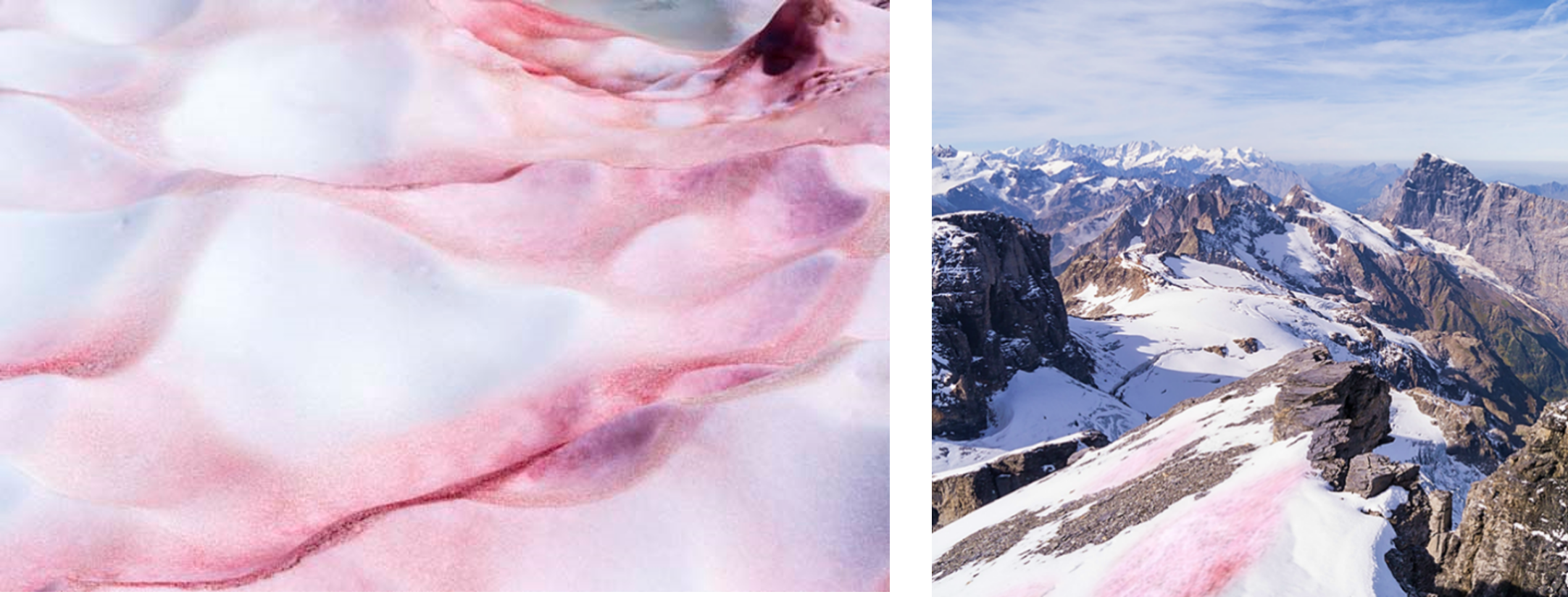
Snow algae change color as part of their seasonal adaptation:
Winter (Dormant Phase – Red Spores)
The algae persist throughout the harsh winter beneath the snow in the form of dormant spores, which are safeguarded by a robust cell wall and enriched with high concentrations of protective molecules, such as carotenoids.
Spring (Active Growth – Green Cells)
With more light, nutrients, and meltwater, spores germinate into green chlorophyll-rich cells that perform photosynthesis. Equipped with two flagella, the cells move through meltwater films toward the snow surface and reproduce.
Summer (Protection Phase and Return to Dormancy)
Due to increasing UV radiation in early summer, the algae produce more protective molecules such as carotenoids and other photoprotective pigments. At the same time, chlorophyll is gradually degraded, and the cell slowly downregulates its metabolism, eventually entering a dormant resting stage, preparing to survive until the next year.
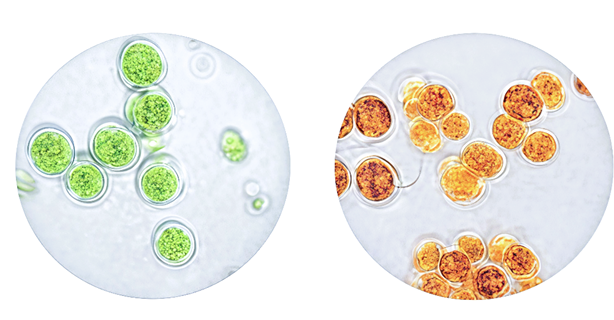
Pigment concentration change is one of the strategies developed by the snow algae to enable them to adapt to their extreme habitat. Production of other secondary metabolites such as biopolymers (gallerten), antifreeze glycoproteins (AFGPs) stress modifiers and osmotically active amino acids and sugars also help these extremophile algae to survive in their habitat.
Snow algae are a powerful natural source of bioactive compounds — but producing them in pure form is extremely challenging. Most large‑scale algae farms grow their cultures in open or non‑sterile systems, where algae coexist with bacteria, fungi, and other organisms. This leads to contamination and requires heavy purification afterward.
To change this, Mibelle Biochemistry developed a fully axenic (pure, sterile, uncontaminated culture of one single organism), large‑scale production system for algae — something that had never existed before.
We created a specially designed Flat Panel Airlift (FPA) bioreactor made from a special X‑ray‑stable PET. Thanks to X‑ray sterilization, these single‑use bioreactors can be made completely free of unwanted microorganisms before cultivation even begins. After inoculation with a pure culture of Coenochloris signiensis (snow algae), the algae can grow for months without contamination.
This breakthrough allowed us to produce 100% clean, high‑quality snow algae biomass on a scale suitable for cosmetic production — reliably, safely, and without the need for complex downstream cleaning.
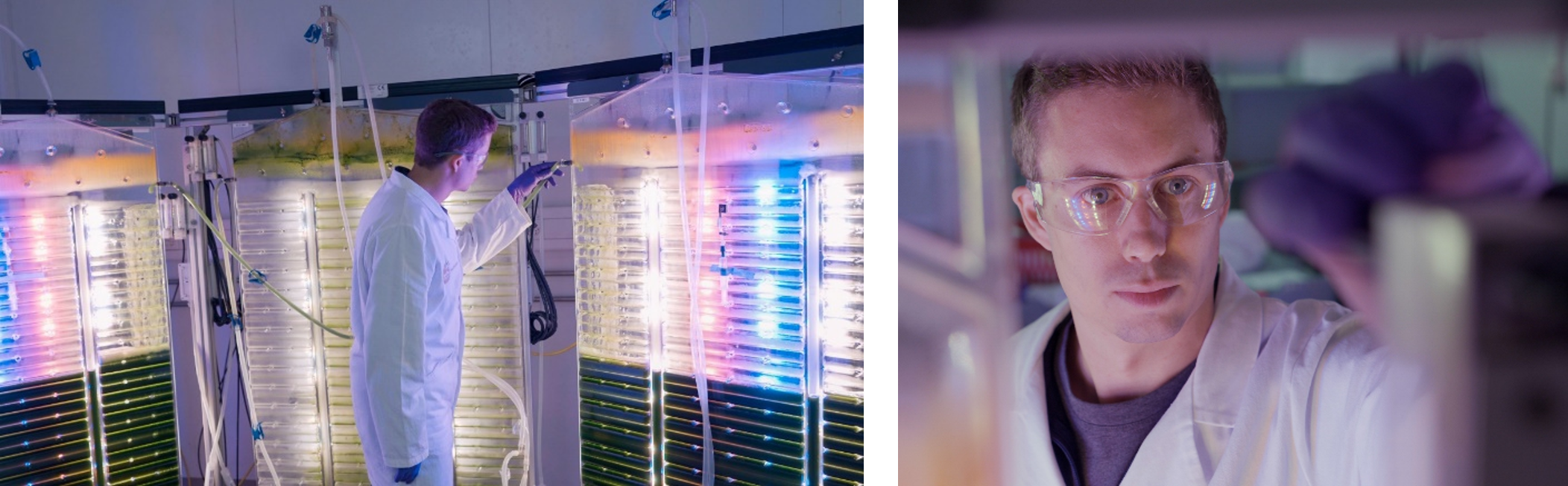
Mimicking Natural Growth and Resting Phases
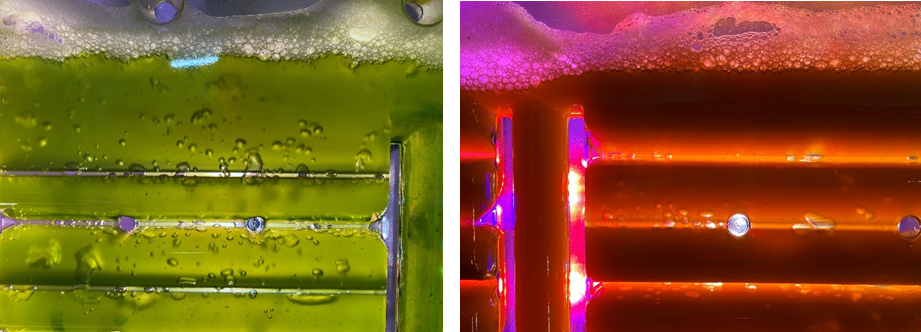
To replicate natural conditions, snow algae are cultivated in a two‑phase bioprocess that mimics both their green growth phase and their red protective/resting phase.
- Green algae are grown for several weeks in our photobioreactors. Light and aeration are provided to enhance their photosynthesis, thereby increasing biomass production.
- In a second phase, nutrient levels are reduced, while light intensity is significantly increased, which triggers the production of carotenoids and transforms the algae into their characteristic red form.
Following their harvest, snow algae are homogenized under high pressure in a phospholipid solution to rupture the cells and create liposomes that encapsulate both water-soluble and oil-soluble active compounds (snow algae extract), thereby improve their bioavailability.
Finally, this liposomal extract is delicately coated onto maltodextrin using a spray granulation process, which yields the active ingredient, EpiSnow™.
Sustainable Production
The cultivation of snow algae in photobioreactors is a sustainable approach because:
- Minimal starting material: Only a very small sample of algae cells is needed to establish a pure snow algae culture.
- Land‑saving production: Snow algae grow in compact photobioreactors, requiring no agricultural land.
- Low water usage: Water consumption is significantly lower compared to conventional plant cultivation.
- Naturally pure: No fertilizers, pesticides, or chemical additives are used at any stage of production.
- GMO‑free: Cultivation is entirely free from genetic engineering.
Renewable energy: Production at the Buchs, Switzerland site uses 98% renewable energy, including electricity from hydropower and heat from wood‑fired heating systems.