
Hairy Root Technology
The “hairy roots” technology is a type of plant tissue culture that is used to produce high quality, phytogenic compounds of pharmaceutical value. The technology is based on hydroponic cultivation of plant roots under controlled conditions, allowing the selective stimulation of valuable bioactive compounds.
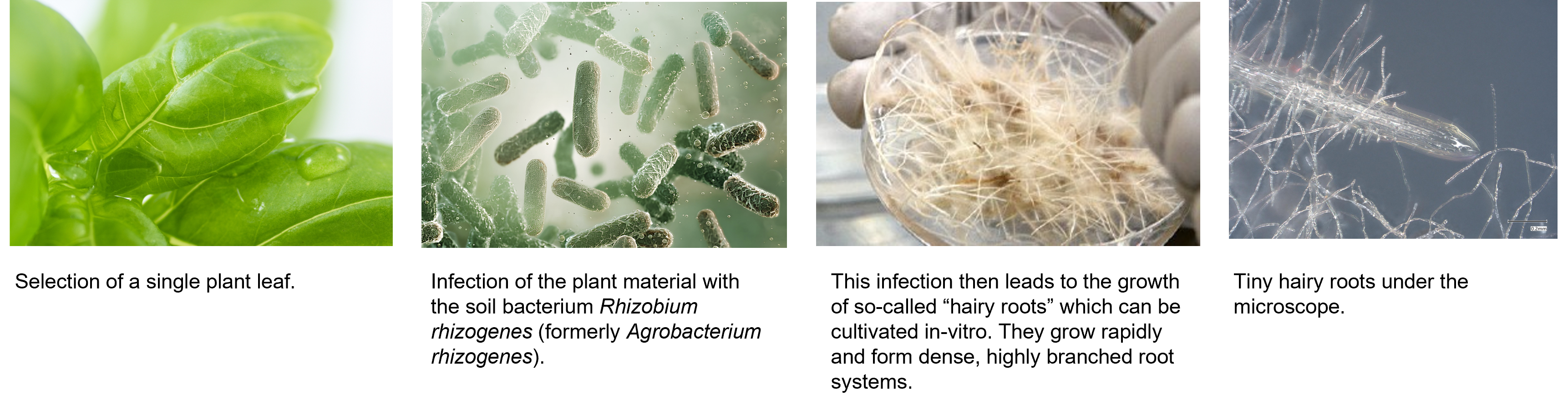
A small part of a plant is infected with the naturally occurring soil bacterium Agrobacterium rhizogenes and cultivated on an agar plate. This infection leads to a natural transformation of plant cells which can then form tiny roots – the so-called “hairy roots”. These hairy roots can be further propagated on artificial culture media in petri-dishes or suspended in liquid media.
A small part of a plant is infected with the naturally occurring soil bacterium Agrobacterium rhizogenes and cultivated on an agar plate. This infection leads to a natural transformation of plant cells which can then form tiny roots – the so-called “hairy roots”. These hairy roots can be further propagated on artificial culture media in petri-dishes or suspended in liquid media.
By growing roots independently from the whole plant, RootBioTec™ focuses on the part of the plant that is naturally responsible for nutrient uptake and metabolic activity. This results in a particularly rich phytochemical profile, often with higher concentrations of active molecules compared to conventional plant extraction.
Plants are cultivated in a soil‑free, sterile environment in large bioreactors, where roots are induced to develop and grow in nutrient‑controlled systems. Environmental factors such as light, nutrients, and growth conditions can be precisely regulated, ensuring consistent quality and reproducibility of the active compounds produced.
Because only renewable root biomass is harvested, the original plant remains intact, making the process highly resource‑efficient and environmentally responsible. The controlled cultivation also eliminates variability caused by climate, geography, or seasonal changes.